 Image 1 of 3
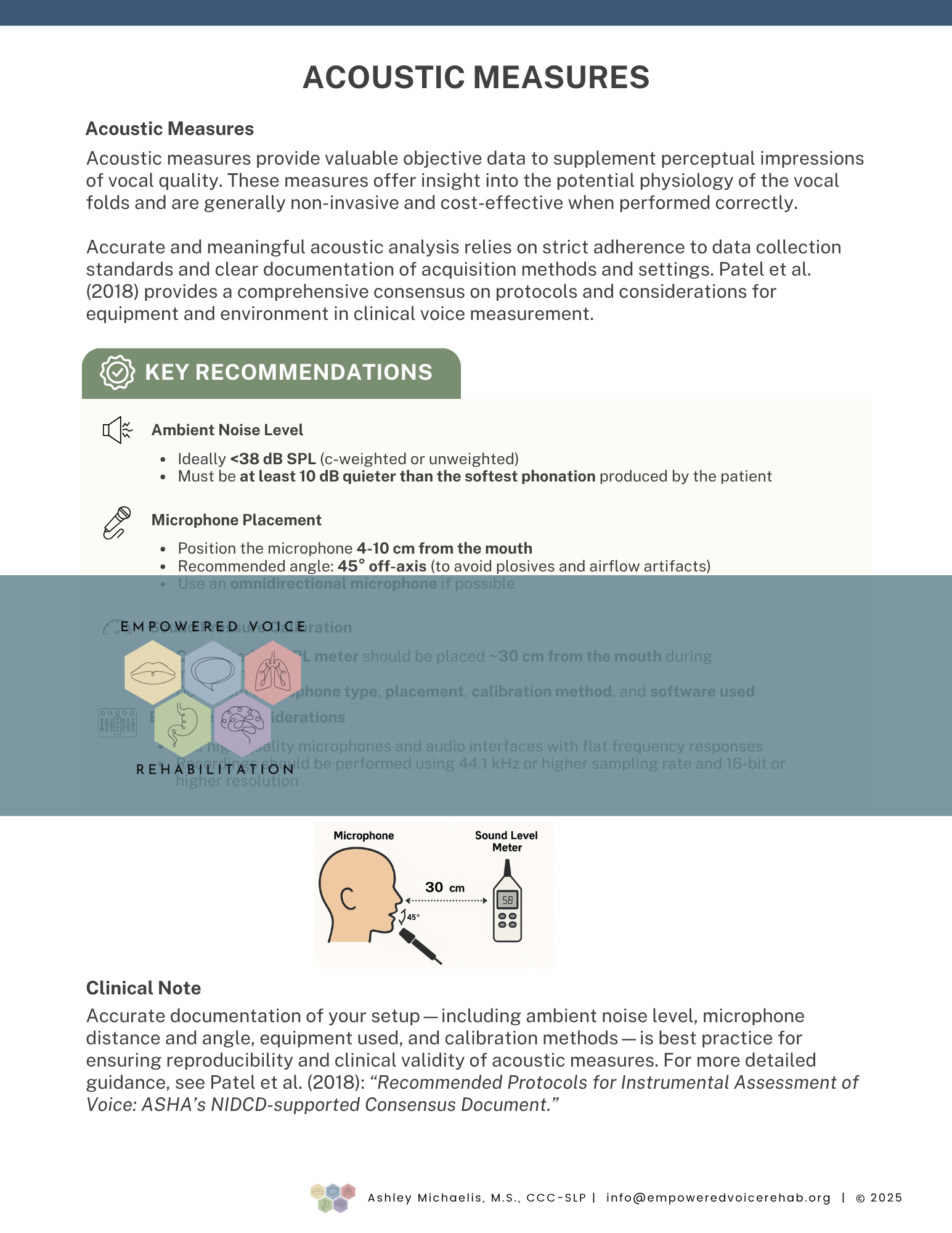 Image 2 of 3
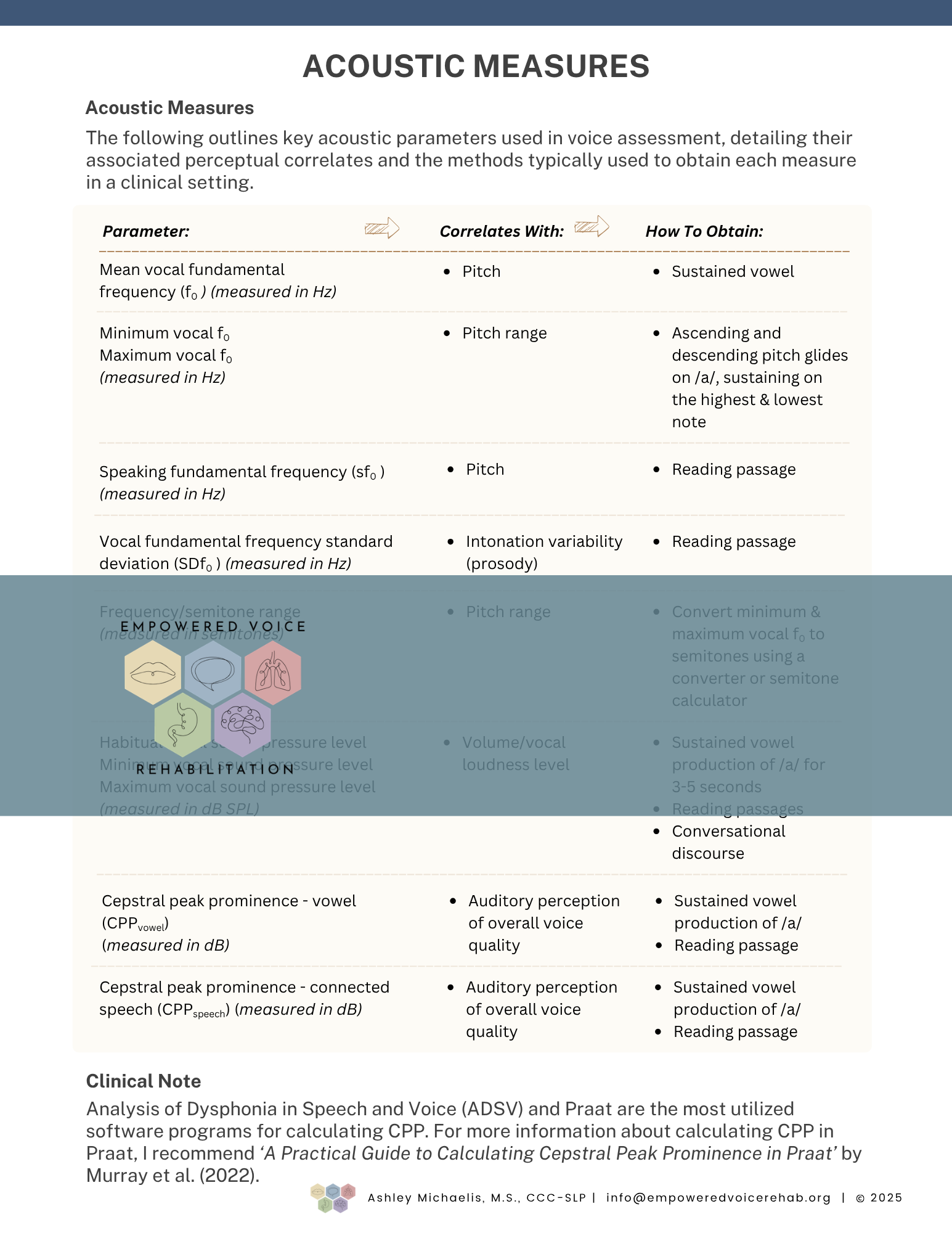 Image 3 of 3
Purpose of This Resource
This guide is designed to support speech-language pathologists (SLPs) in confidently completing critical components of a clinical voice evaluation: Ensuring a comprehensive, evidence-based assessment that directly informs functional, individualized therapy planning.
Why It Matters
Many clinicians are skilled at identifying perceptual voice concerns but may feel less confident interpreting acoustic, aerodynamic, and instrumental data. This can lead to under-documentation, missed diagnostic cues, or vague therapy plans. A structured approach helps SLPs:
Identify and organize the essential elements of a voice evaluation
Interpret acoustic and aerodynamic findings with greater clinical precision
Ensure consistency and completeness in documentation
Increase diagnostic clarity for referrals and progress tracking
What’s Included
This 18-page quick reference digital download includes:
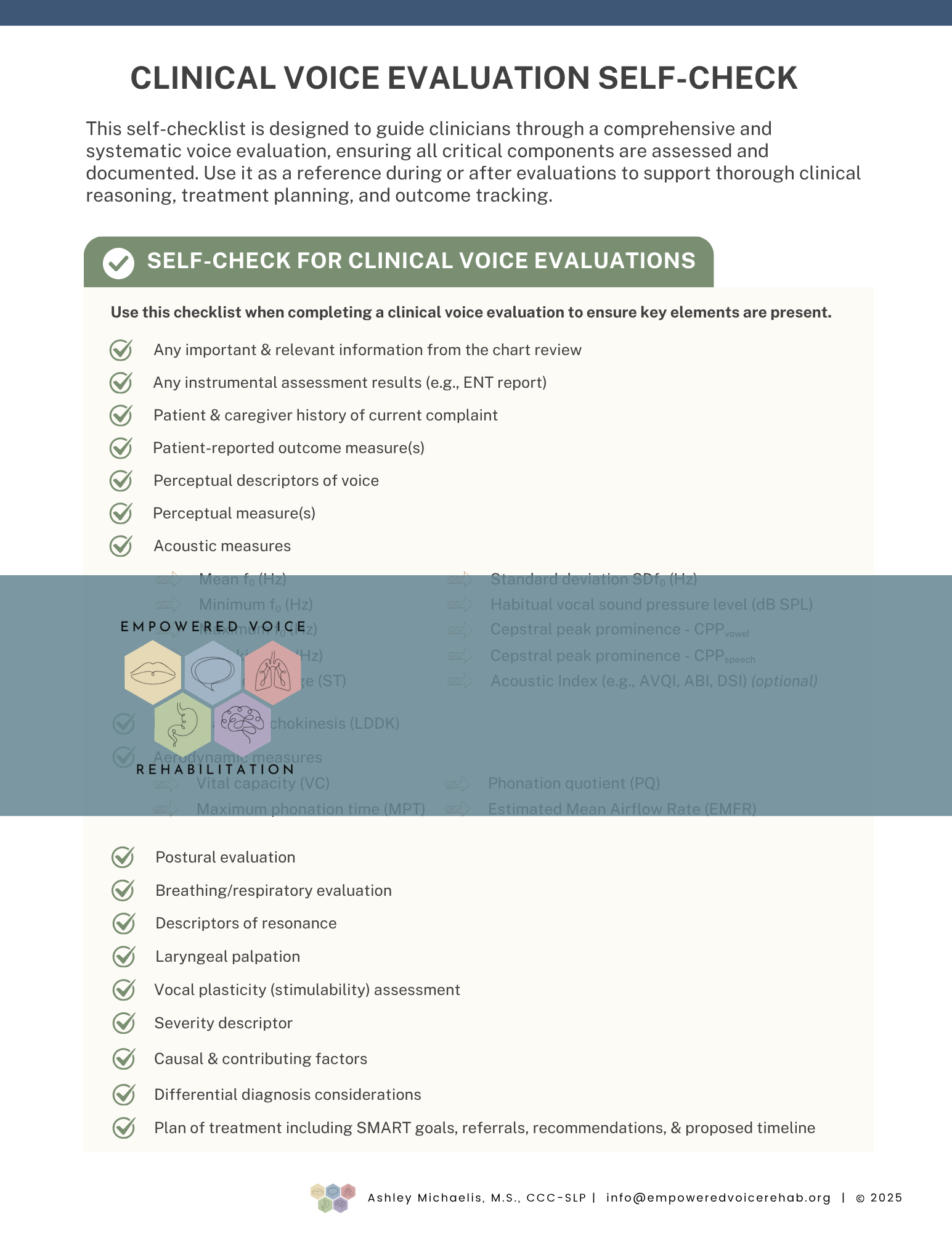
A self-checklist for clinical voice evaluations
Guidelines for acoustic and aerodynamic measures, including normative data
Overview of voice signal types and implications for data interpretation
Practical details for collecting and analyzing cepstral and AVQI/DSI/ABI metrics
Norm-referenced benchmarks across age, gender, and clinical variables
How to Use This Resource
Use during voice evaluations to ensure thoroughness and accuracy
Reference during documentation and progress note writing
Guide interpretation of results in dysphonia severity, vocal efficiency, and treatment planning
Provide evidence-based rationale for referrals, re-evaluations, and collaborative care.
Important Note
This guide is designed to support—but not replace—clinical judgment. Normative data and suggested tools should always be interpreted within the context of the patient’s full medical, functional, and psychosocial presentation.
Purpose of This Resource
This guide is designed to support speech-language pathologists (SLPs) in confidently completing critical components of a clinical voice evaluation: Ensuring a comprehensive, evidence-based assessment that directly informs functional, individualized therapy planning.
Why It Matters
Many clinicians are skilled at identifying perceptual voice concerns but may feel less confident interpreting acoustic, aerodynamic, and instrumental data. This can lead to under-documentation, missed diagnostic cues, or vague therapy plans. A structured approach helps SLPs:
Identify and organize the essential elements of a voice evaluation
Interpret acoustic and aerodynamic findings with greater clinical precision
Ensure consistency and completeness in documentation
Increase diagnostic clarity for referrals and progress tracking
What’s Included
This 18-page quick reference digital download includes:
A self-checklist for clinical voice evaluations
Guidelines for acoustic and aerodynamic measures, including normative data
Overview of voice signal types and implications for data interpretation
Practical details for collecting and analyzing cepstral and AVQI/DSI/ABI metrics
Norm-referenced benchmarks across age, gender, and clinical variables
How to Use This Resource
Use during voice evaluations to ensure thoroughness and accuracy
Reference during documentation and progress note writing
Guide interpretation of results in dysphonia severity, vocal efficiency, and treatment planning
Provide evidence-based rationale for referrals, re-evaluations, and collaborative care.
Important Note
This guide is designed to support—but not replace—clinical judgment. Normative data and suggested tools should always be interpreted within the context of the patient’s full medical, functional, and psychosocial presentation.