Sale Price:
$20.00
Original Price:
$30.00
Purpose of This Resource
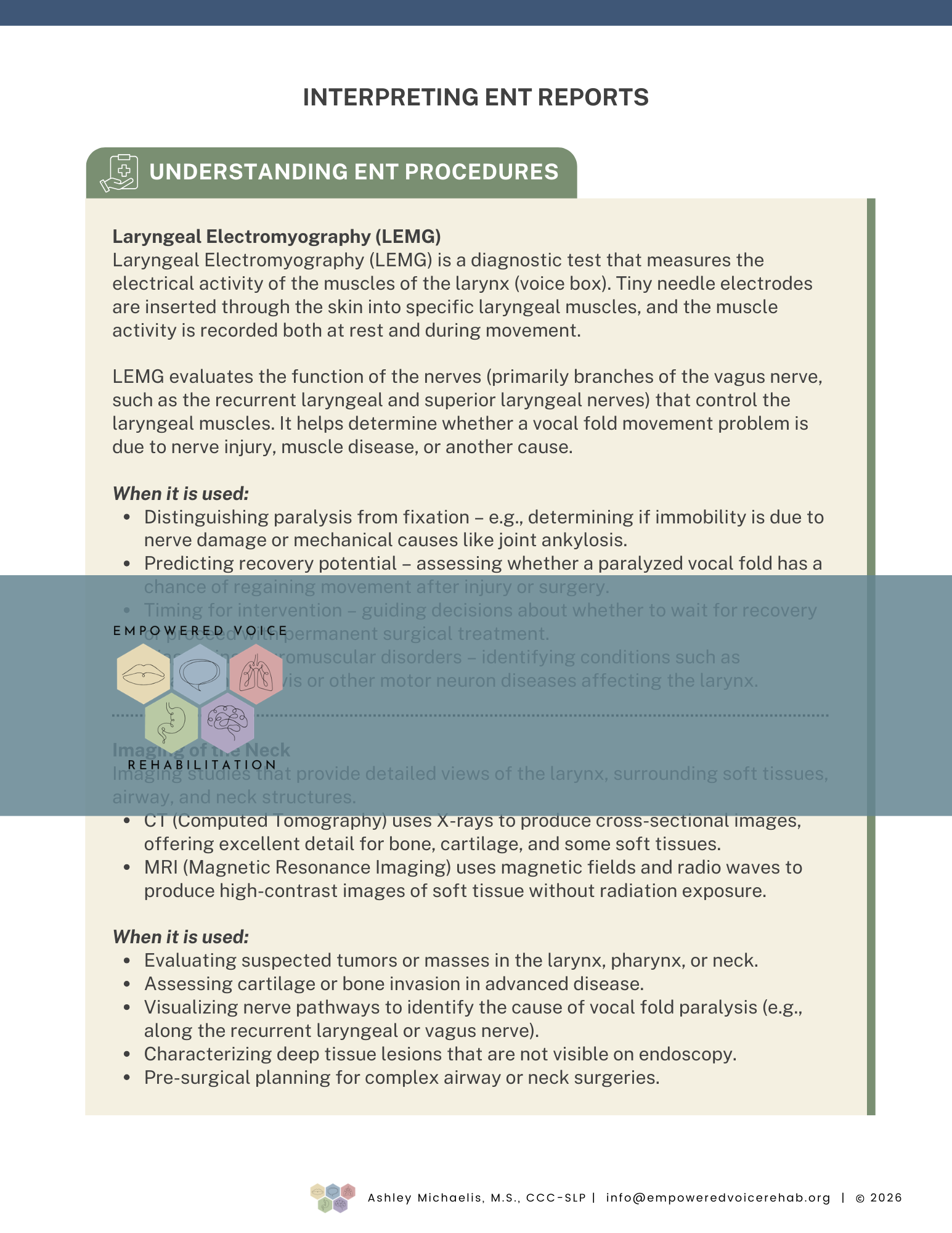
This guide is designed to support speech-language pathologists (SLPs) in confidently interpreting otolaryngology (ENT) reports—particularly stroboscopy and laryngoscopy findings—to bridge the gap between anatomical/physiological observations and practical, functional voice therapy planning.
Why It Matters
While ENT reports provide vital visual and descriptive data about vocal fold structure and movement, many SLPs are not confident in correlating these findings with real-world voice function. This can make it challenging to:
Understand the functional significance of reported findings.
Determine the appropriate therapy direction based on anatomical observations.
Communicate effectively with referring ENTs about patient progress or discrepancies.
What’s Included
This 41-page resource includes:
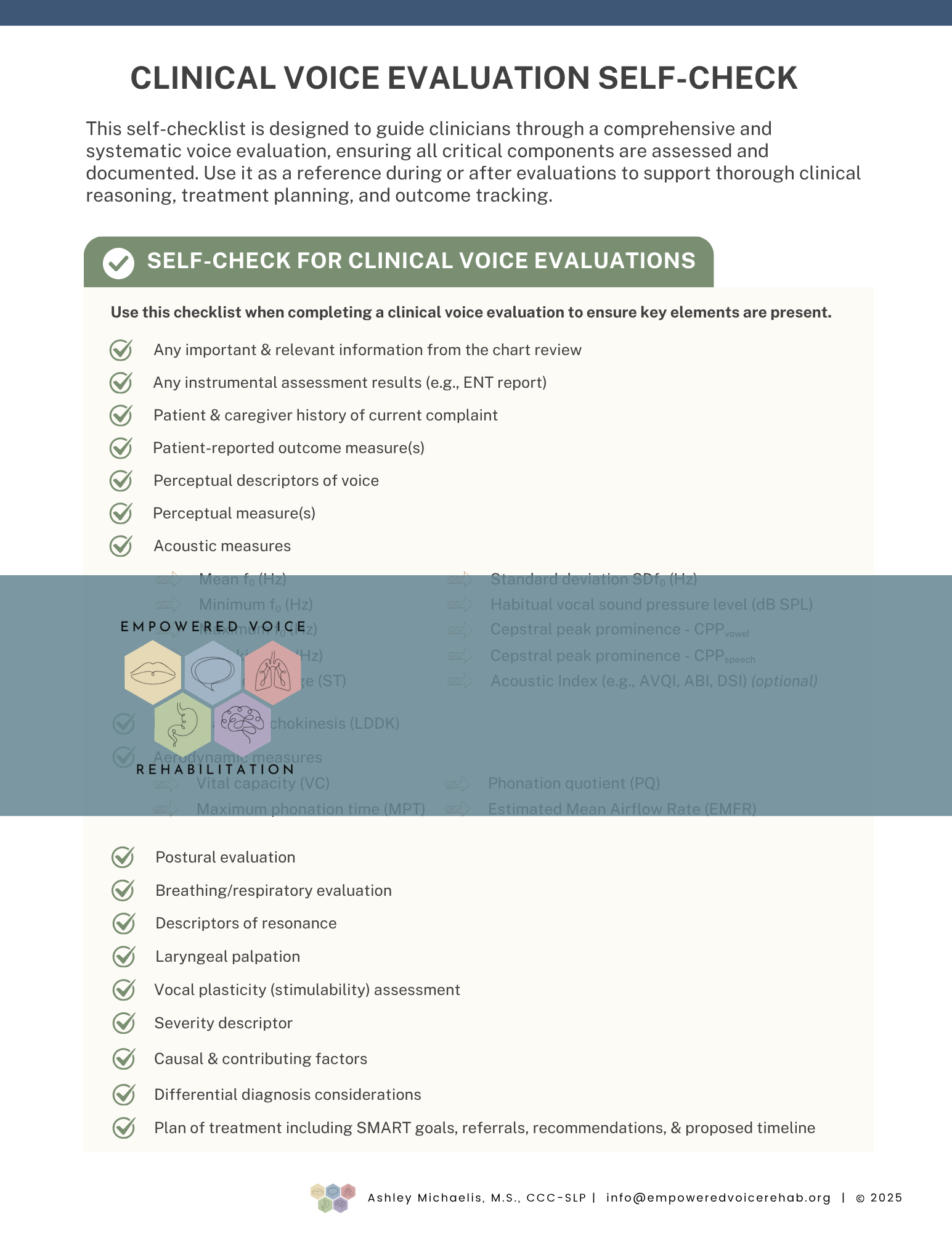
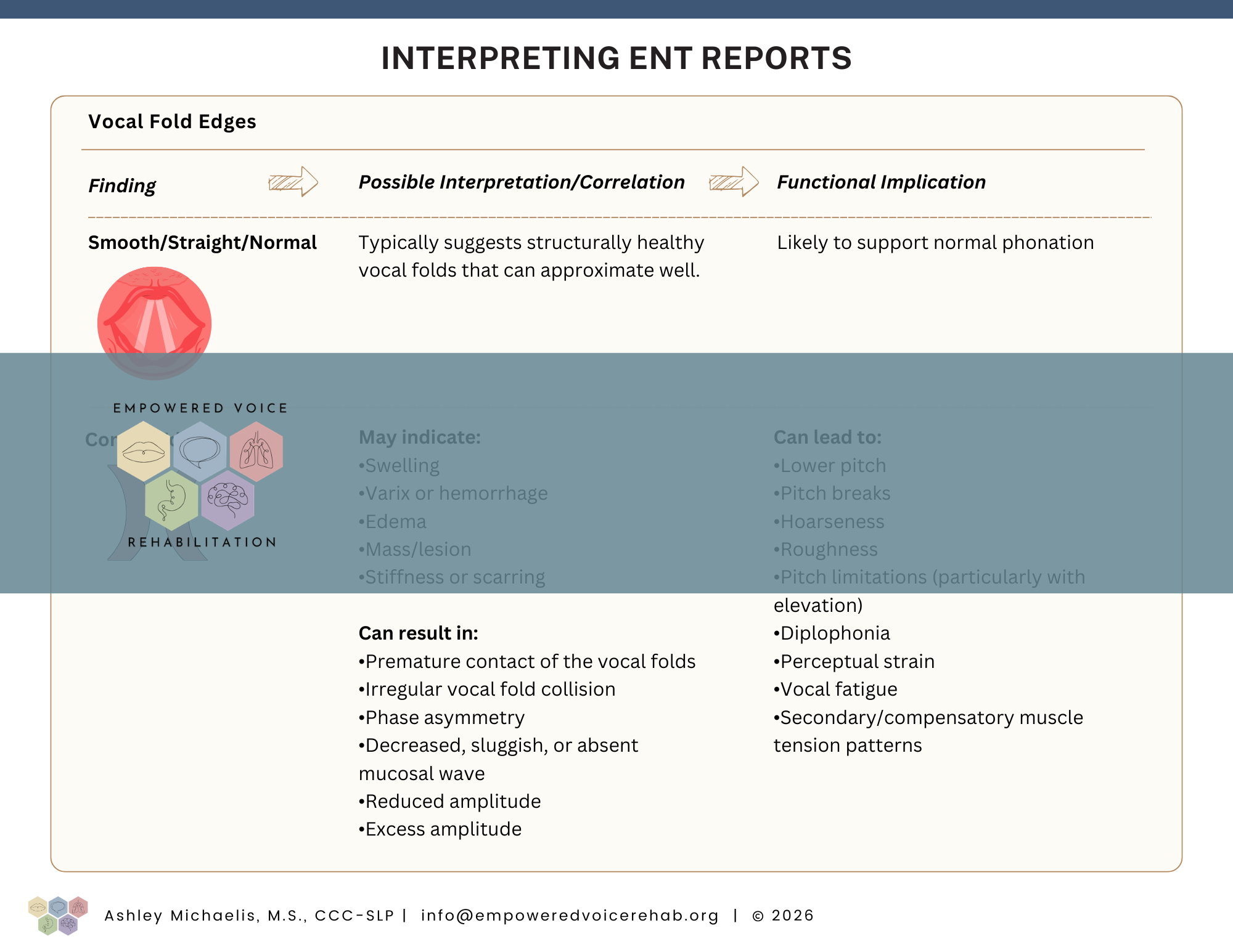
Common ENT report parameters & findings.
Possible etiologies, correlations, and clinical interpretations of findings.
Associated functional voice implications (e.g., breathiness, strain, vocal fatigue).
Red flags that may indicate incomplete, unclear, or inadequate reporting.
Suggested collaborative actions for SLPs when ENT data is ambiguous or misaligned with patient presentation.
How to Use This Resource
Use this as a quick-reference guide when reviewing stroboscopy or laryngoscopy reports.
Guide your clinical decision-making to align therapy with physiological findings.
Identify when to advocate for further medical evaluation, imaging, or clarification.
Incorporate findings into patient-friendly education, explaining the "why" behind therapy goals.
Important Note
This guide is not intended to replace clinical judgment or the ENT’s diagnosis. Instead, it empowers SLPs to interpret, synthesize, and integrate findings enabling more functional, targeted, and collaborative care. The information presented reflects possible and likely interpretations, correlations, and functional implications based on common clinical patterns. However, not all patients will fit the mold. Variability is expected, and SLPs should always apply individualized clinical reasoning when integrating ENT findings into treatment planning.
Purpose of This Resource
This guide is designed to support speech-language pathologists (SLPs) in confidently interpreting otolaryngology (ENT) reports—particularly stroboscopy and laryngoscopy findings—to bridge the gap between anatomical/physiological observations and practical, functional voice therapy planning.
Why It Matters
While ENT reports provide vital visual and descriptive data about vocal fold structure and movement, many SLPs are not confident in correlating these findings with real-world voice function. This can make it challenging to:
Understand the functional significance of reported findings.
Determine the appropriate therapy direction based on anatomical observations.
Communicate effectively with referring ENTs about patient progress or discrepancies.
What’s Included
This 41-page resource includes:
Common ENT report parameters & findings.
Possible etiologies, correlations, and clinical interpretations of findings.
Associated functional voice implications (e.g., breathiness, strain, vocal fatigue).
Red flags that may indicate incomplete, unclear, or inadequate reporting.
Suggested collaborative actions for SLPs when ENT data is ambiguous or misaligned with patient presentation.
How to Use This Resource
Use this as a quick-reference guide when reviewing stroboscopy or laryngoscopy reports.
Guide your clinical decision-making to align therapy with physiological findings.
Identify when to advocate for further medical evaluation, imaging, or clarification.
Incorporate findings into patient-friendly education, explaining the "why" behind therapy goals.
Important Note
This guide is not intended to replace clinical judgment or the ENT’s diagnosis. Instead, it empowers SLPs to interpret, synthesize, and integrate findings enabling more functional, targeted, and collaborative care. The information presented reflects possible and likely interpretations, correlations, and functional implications based on common clinical patterns. However, not all patients will fit the mold. Variability is expected, and SLPs should always apply individualized clinical reasoning when integrating ENT findings into treatment planning.

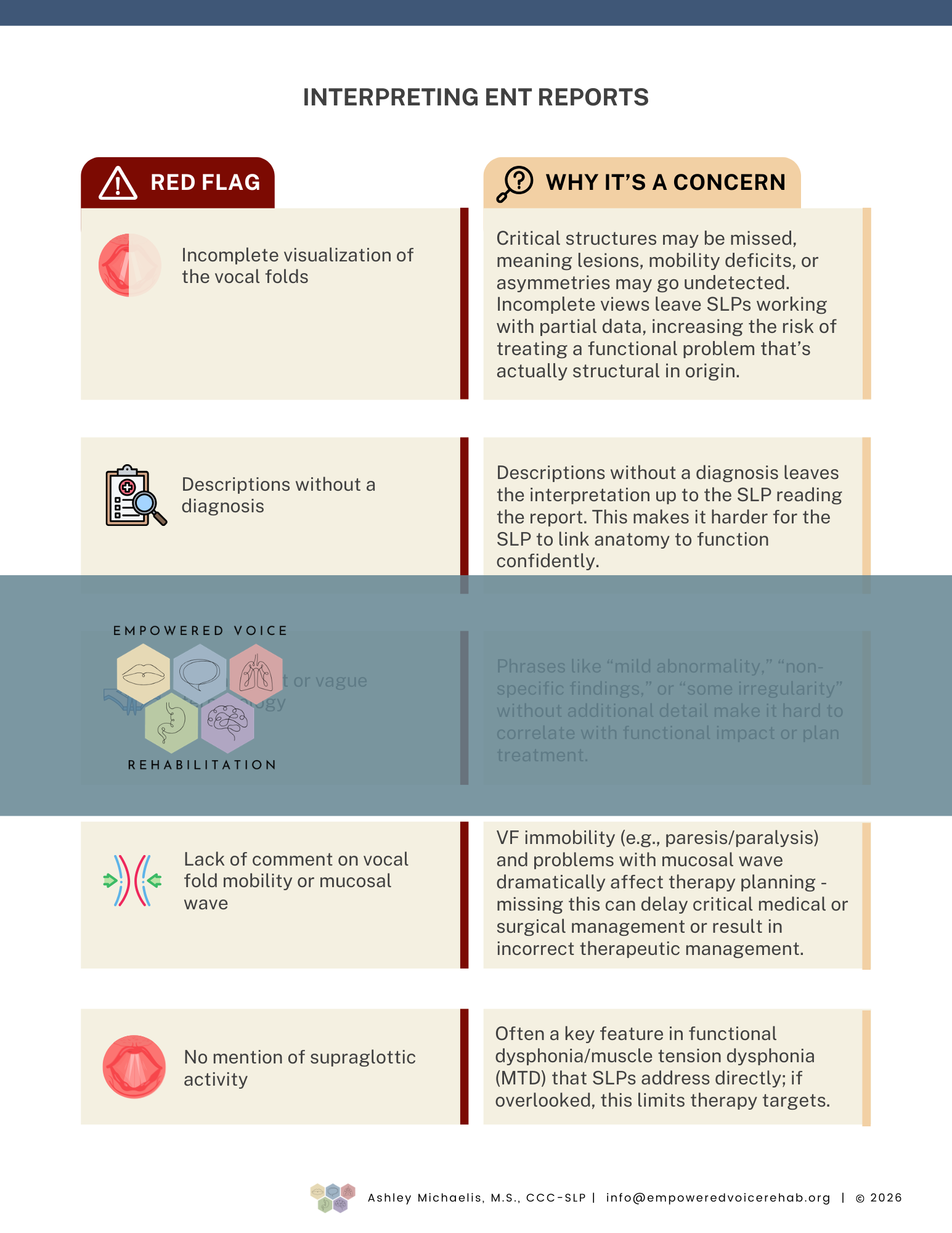 Image 1 of 6
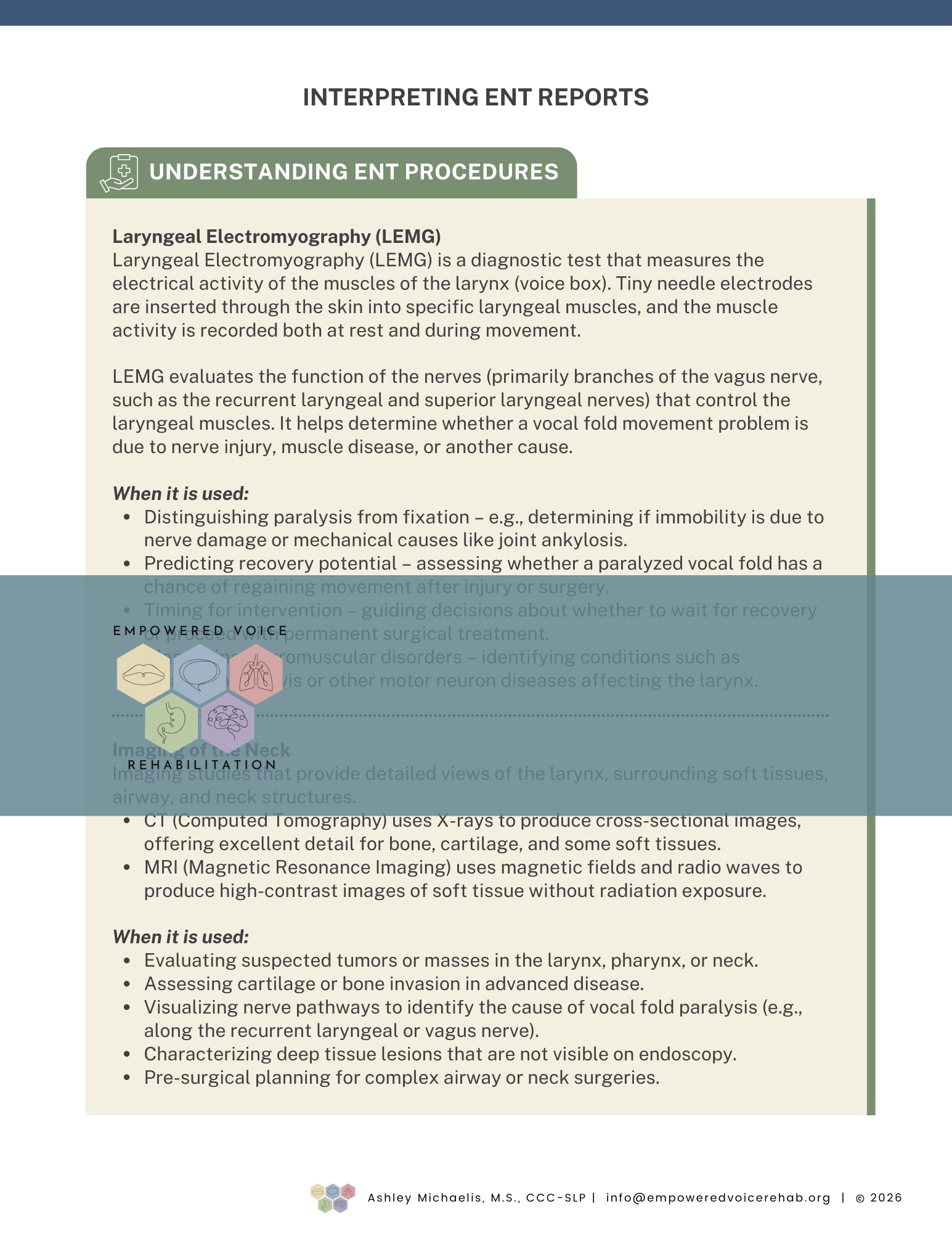 Image 2 of 6
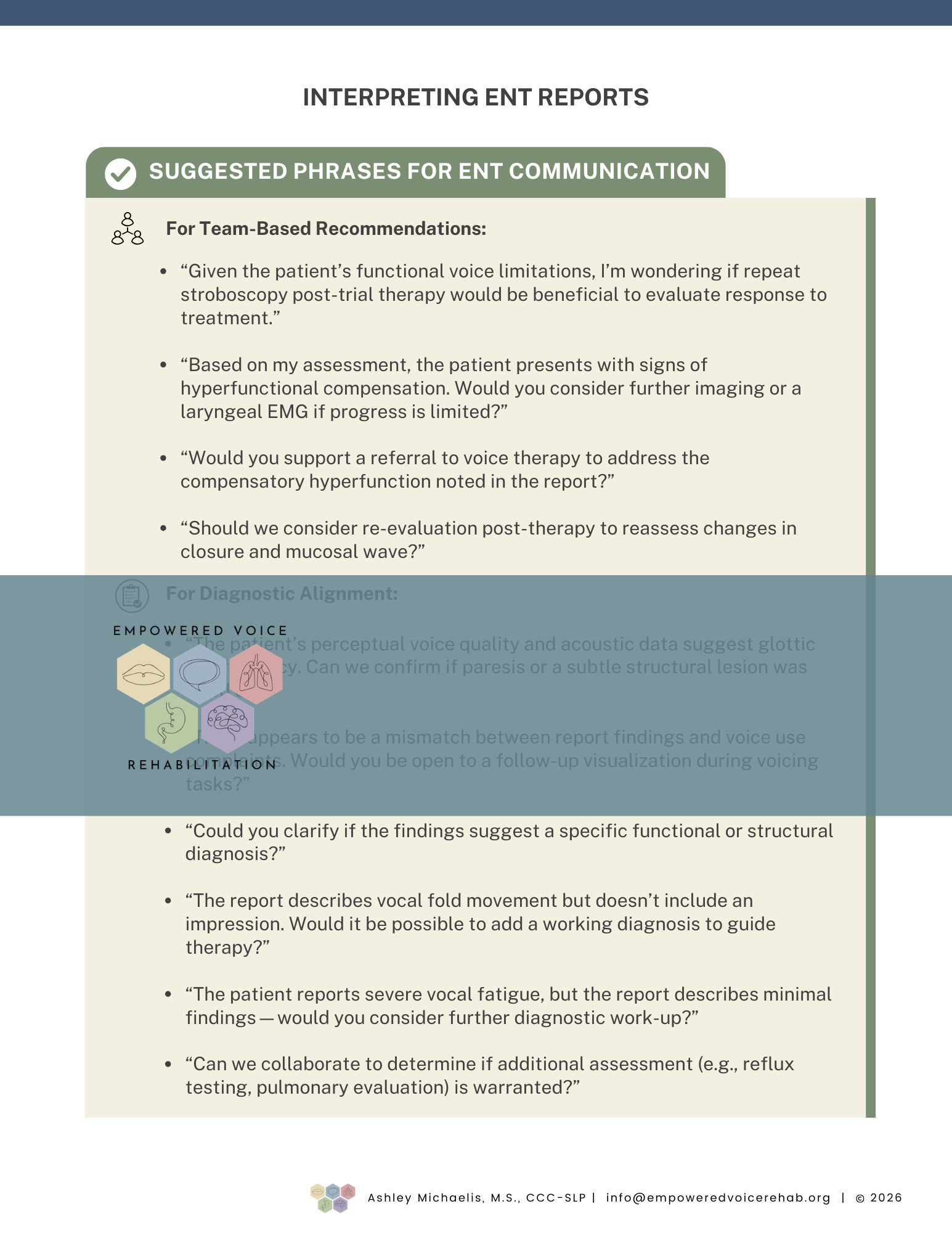 Image 3 of 6
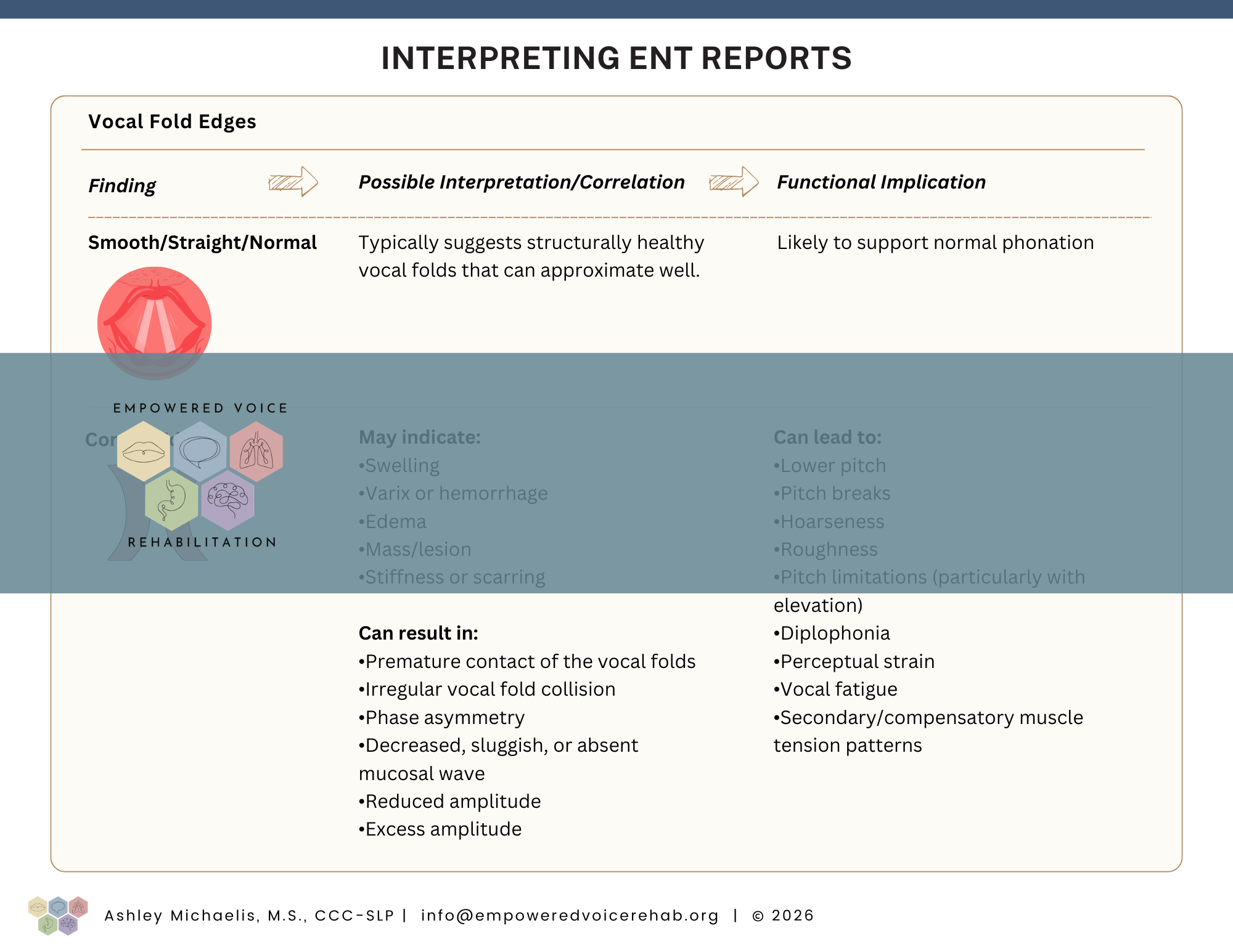 Image 4 of 6
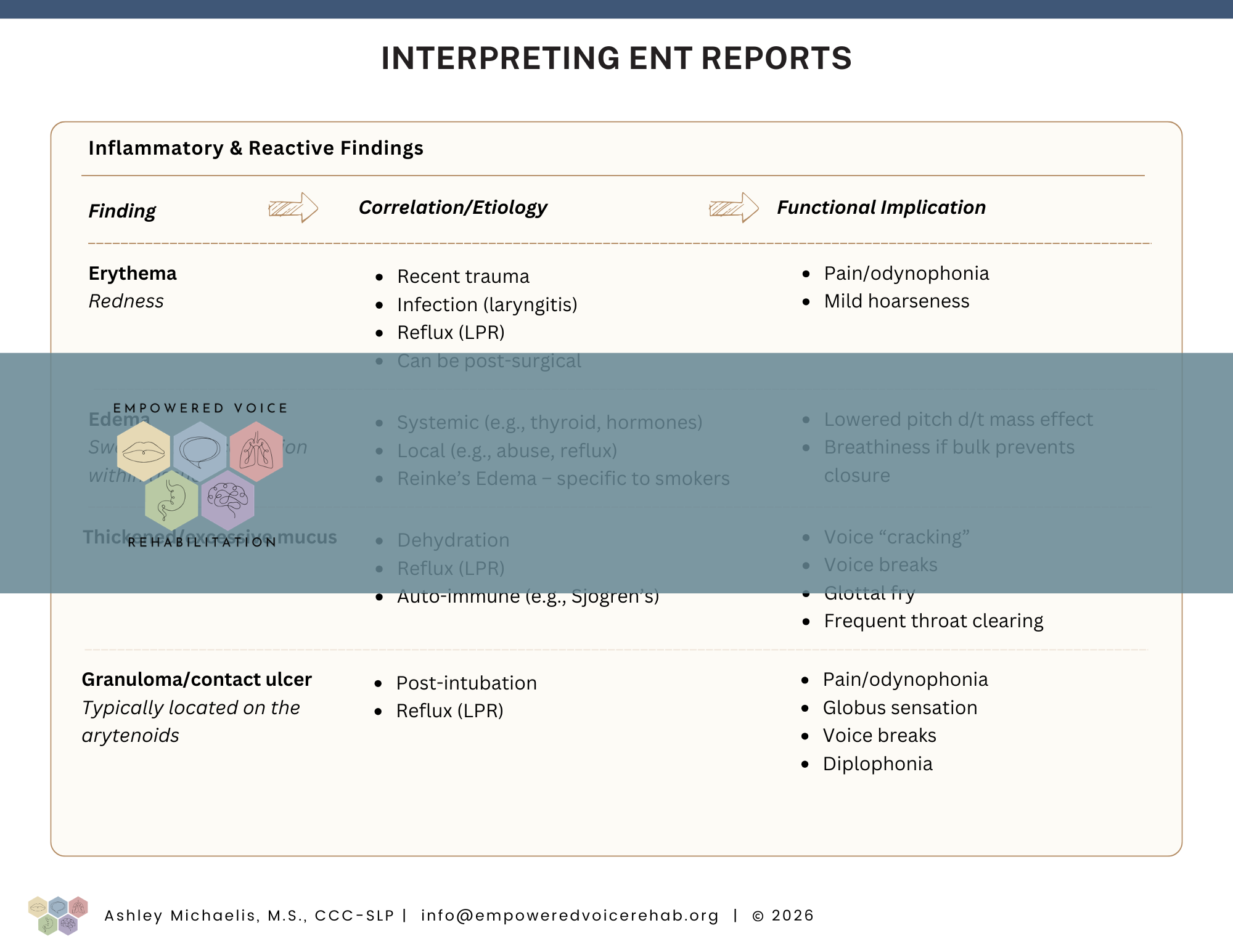 Image 5 of 6
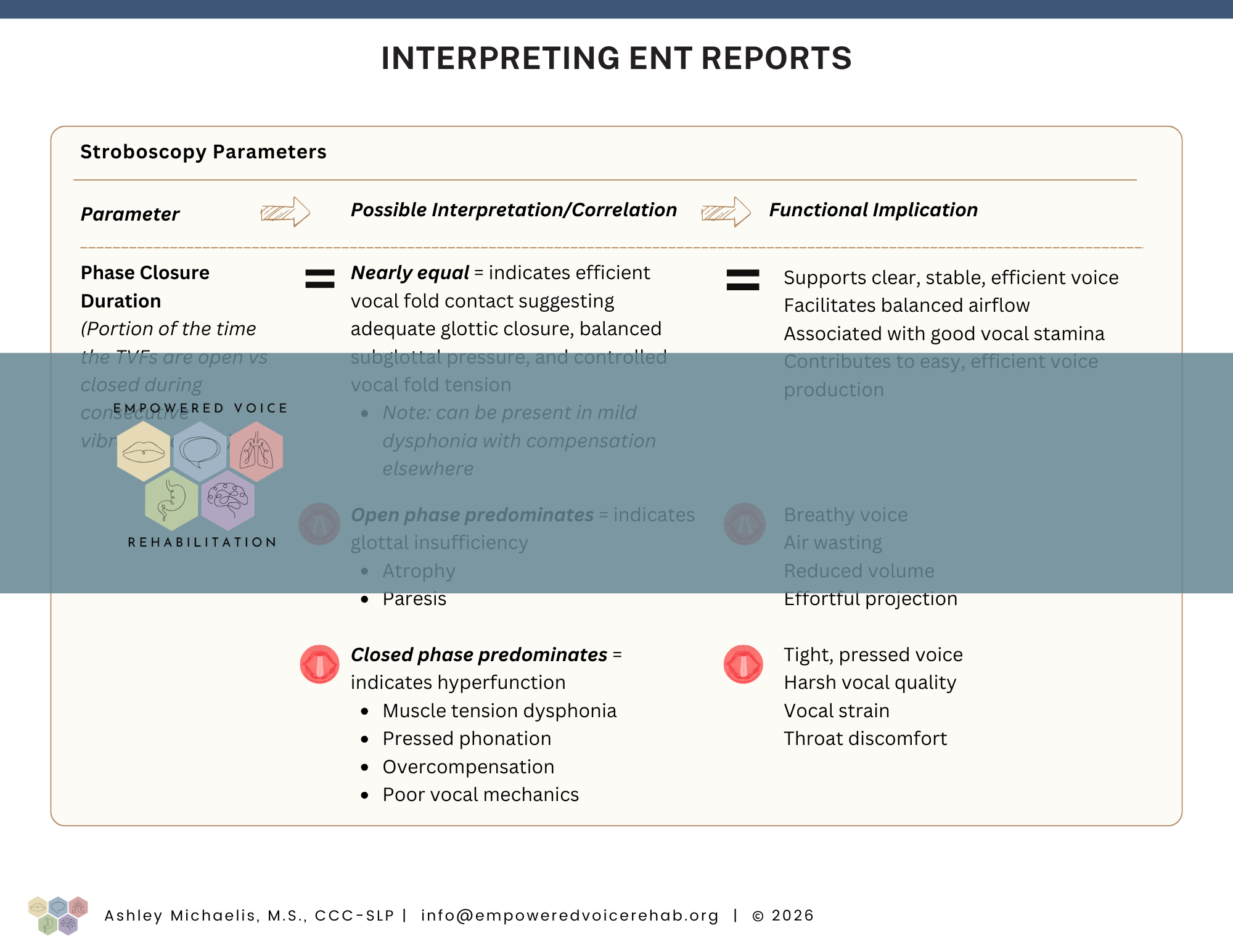 Image 6 of 6